
Saffron
4 products
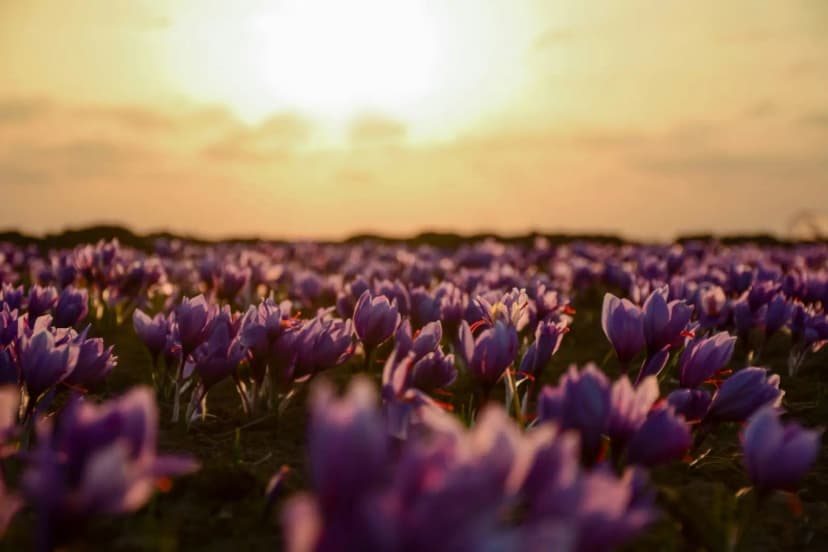
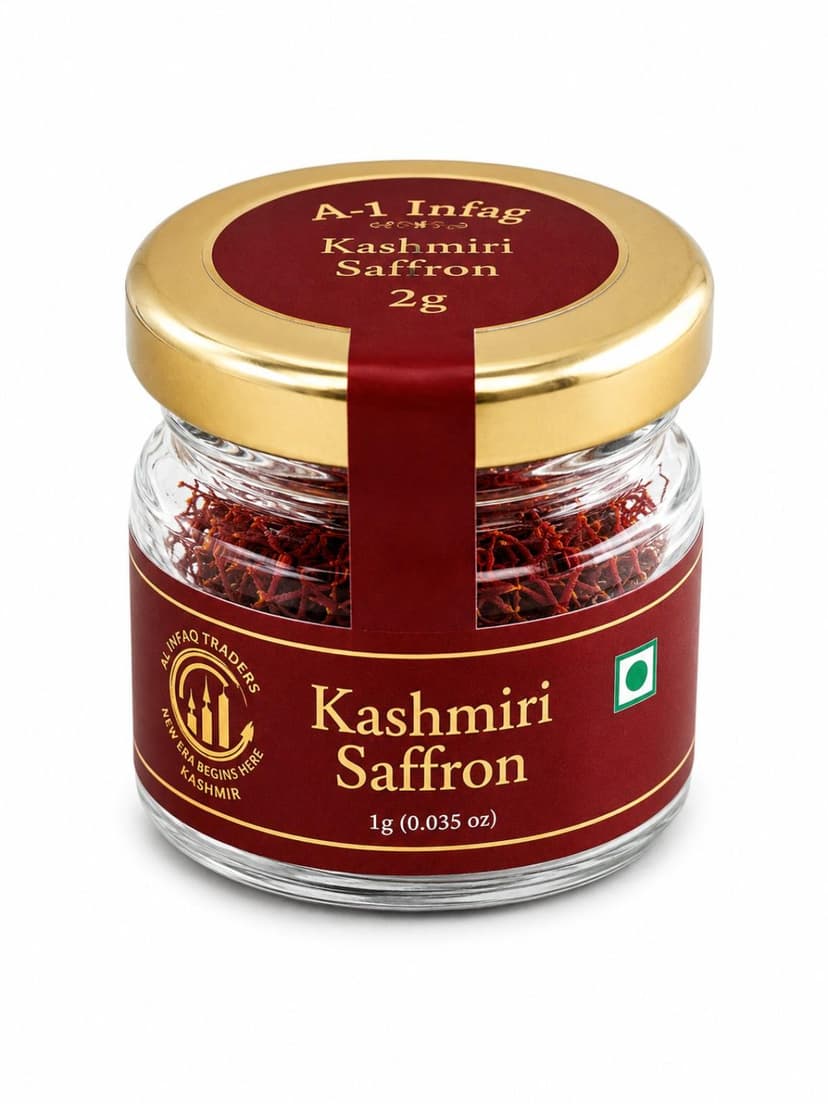
Pampore's karewa soils grow the world's most prized saffron, and for three weeks each autumn the fields turn violet at dawn. What we sell is that harvest, graded honestly: deep-crimson mongra for special dishes, whole-thread lachha for daily kahwa — every tin GI-tagged, lab-tested and traceable to its picking date.
Selling fast — many people are viewing this
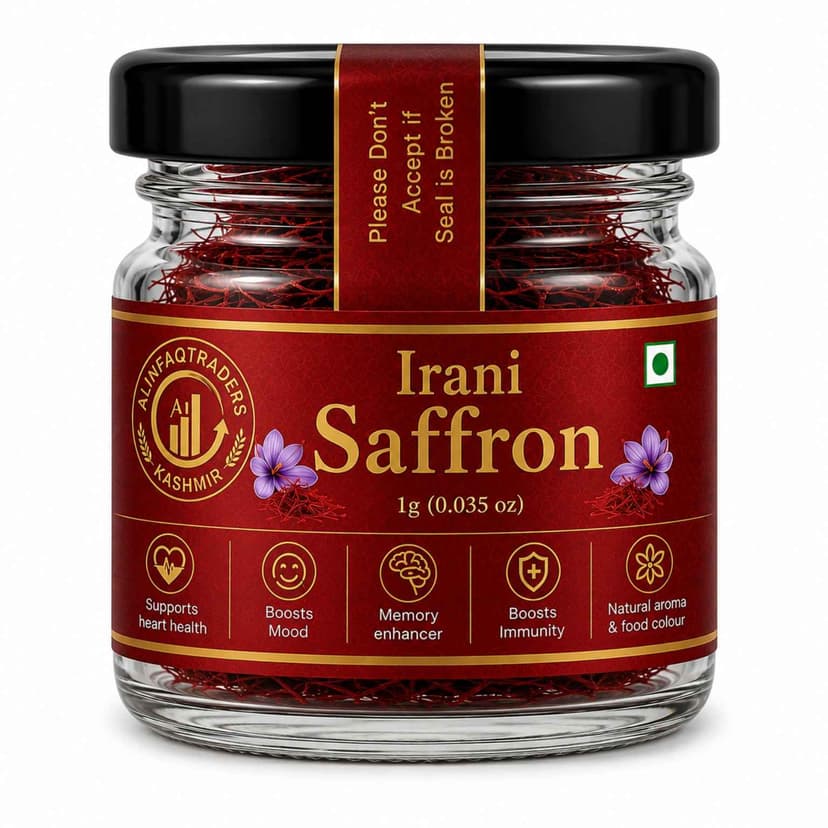
Saffron buying guide
Reading saffron grades
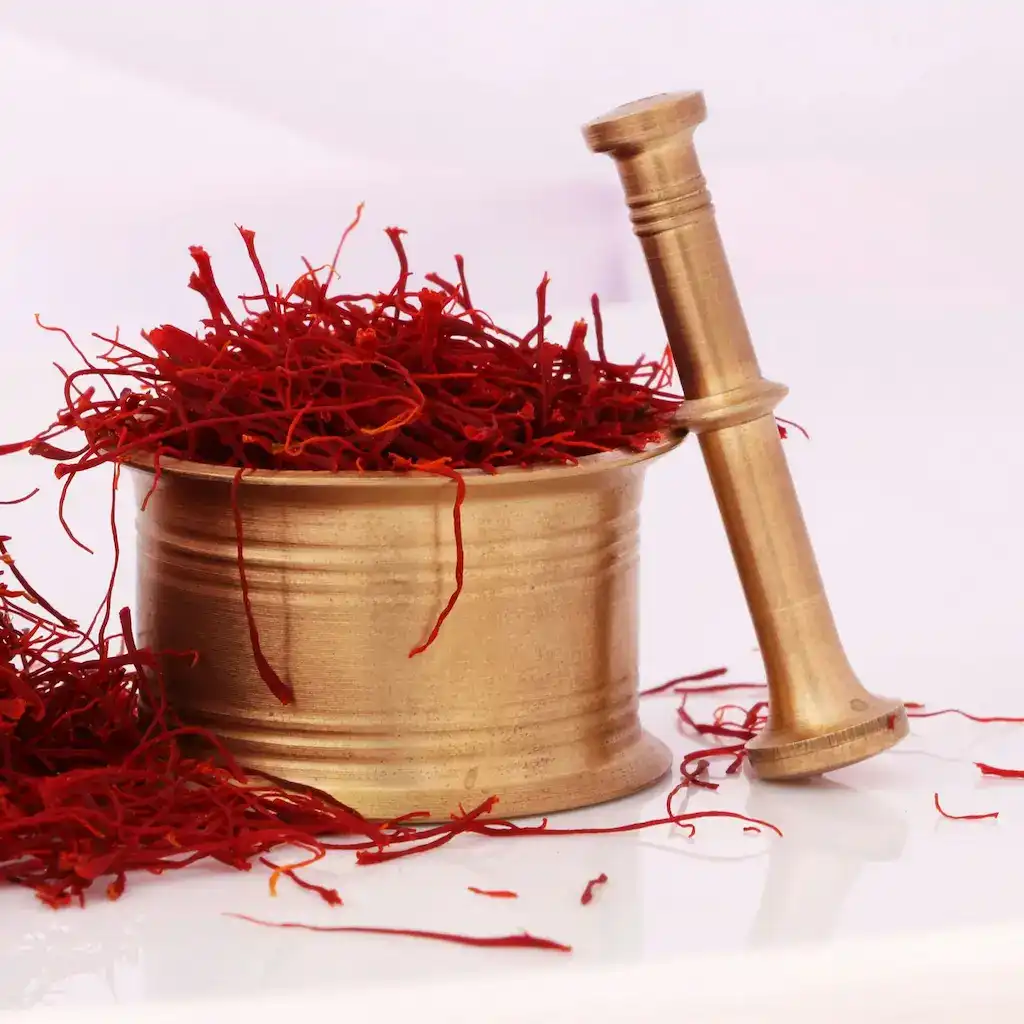
Mongra is the trimmed stigma tip — all crimson, no style — the strongest colour and aroma per strand. Lachha keeps the yellow style attached: gentler, cheaper per gram, ideal for daily use. 'Zarda' (loose yellow style) has little culinary value and is where most adulteration hides. If a price looks too good for mongra, it isn't mongra.
How to test saffron at home
Steep two strands in warm water. Real saffron releases a golden hue slowly over minutes while the strand stays whole, and smells of honey-hay — not perfume. Instant deep-red colour, dissolving strands, or an overpowering smell before steeping are the classic fake tells. And real mongra never stains fingers dry.
Using saffron properly
Never boil it. Bloom strands in warm water or milk for ten minutes, then add at the end of cooking. Quantities are tiny: 2–3 strands per cup of kahwa or milk, 8–10 for a family biryani or kheer. A 2g tin, used correctly, outlasts most 5g bazaar packets used wastefully.